


The healthcare industry is rapidly undergoing digital transformation, with the global digital health market projected to reach about USD 660 billion by 2028, according to Wifitallets, and mobile health apps playing a key role in improving patient care and operational efficiency. From telemedicine and remote monitoring to appointment scheduling and health data management, mobile applications are reshaping how healthcare services are delivered.
Custom healthcare mobile application development allows healthcare organizations to build solutions that match their workflows, compliance requirements, and long-term goals. In this guide, we explore the essentials of mobile health app development, including app types, key features, benefits, development process, costs, and future trends.
What Is a Mobile Health App?
Mobile health (mHealth) apps are software applications developed for smartphones, tablets, and wearable devices to support healthcare services, medical processes, and health management. These apps utilize mobile technologies to help users monitor health conditions, access medical services, manage treatments, and communicate with healthcare service providers anytime and anywhere.
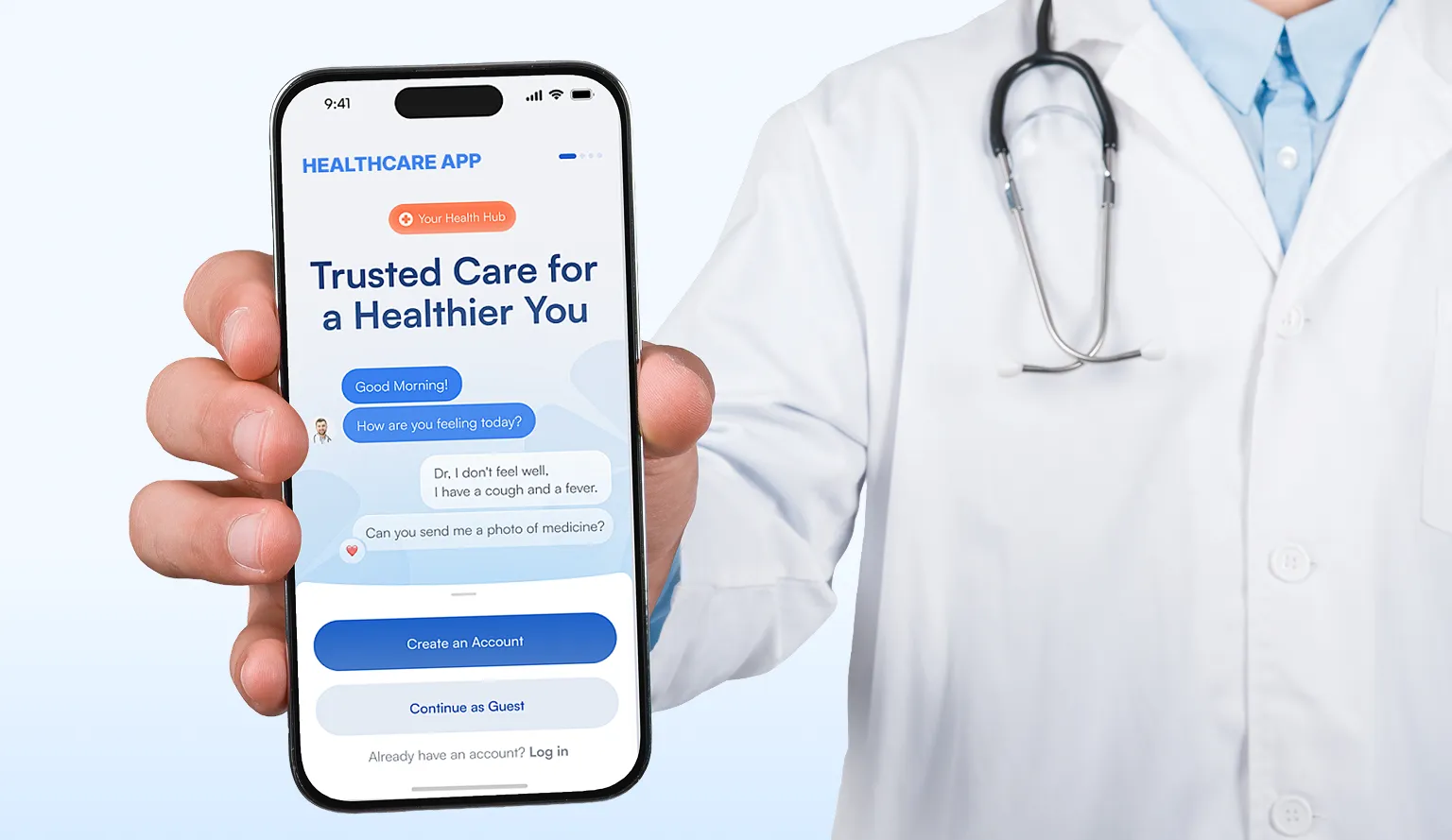
With an advanced mHealth app, the healthcare organization can serve a wide range of purposes, including:
- Telemedicine & Virtual Consultations
- Appointment Scheduling & Patient Management
- Remote Patient Monitoring (RPM)
- Chronic Disease Management
- Medication Management
- Electronic Health Records (EHR/EMR) Access
- Health & Wellness Tracking
- Mental Health Care
A healthcare mobile app is highly recommended with a healthcare business or organization that wants to improve workflows, serve user needs, as well as build their own competitive features with a custom one. For example, the healthcare service provider wants to build advanced features such as telemedicine, AI diagnostics, or custom patient treatment flows…
Types of Mobile Health & Medical Applications
Mobile health and medical applications can be categorized based on their purpose, target users, and level of medical involvement. You should understand these types of health apps when developing your own mobile health app, because each type has different features, compliance, and complexity requirements.
Patient-facing mobile health apps
These apps are designed primarily for patients to manage their health and interact with healthcare services.
Doctor & clinical workflow apps
Doctor and clinical workflow apps are built to support healthcare professionals in delivering care more efficiently by managing clinical and administrative tasks.
Telemedicine and virtual care apps
Telemedicine and virtual care apps enable remote healthcare delivery through digital communication channels, making healthcare more accessible and cost-effective.
Remote patient monitoring & wearable-based apps
Remote patient monitoring (RPM) and wearable-based apps collect and analyze real-time health data from medical devices and wearables to support in-home care.
Benefits of Custom Mobile Health Apps
Custom mobile health apps provide significant advantages and address the specific needs of patients, clinicians, and healthcare organizations. Below are the key benefits for your reference
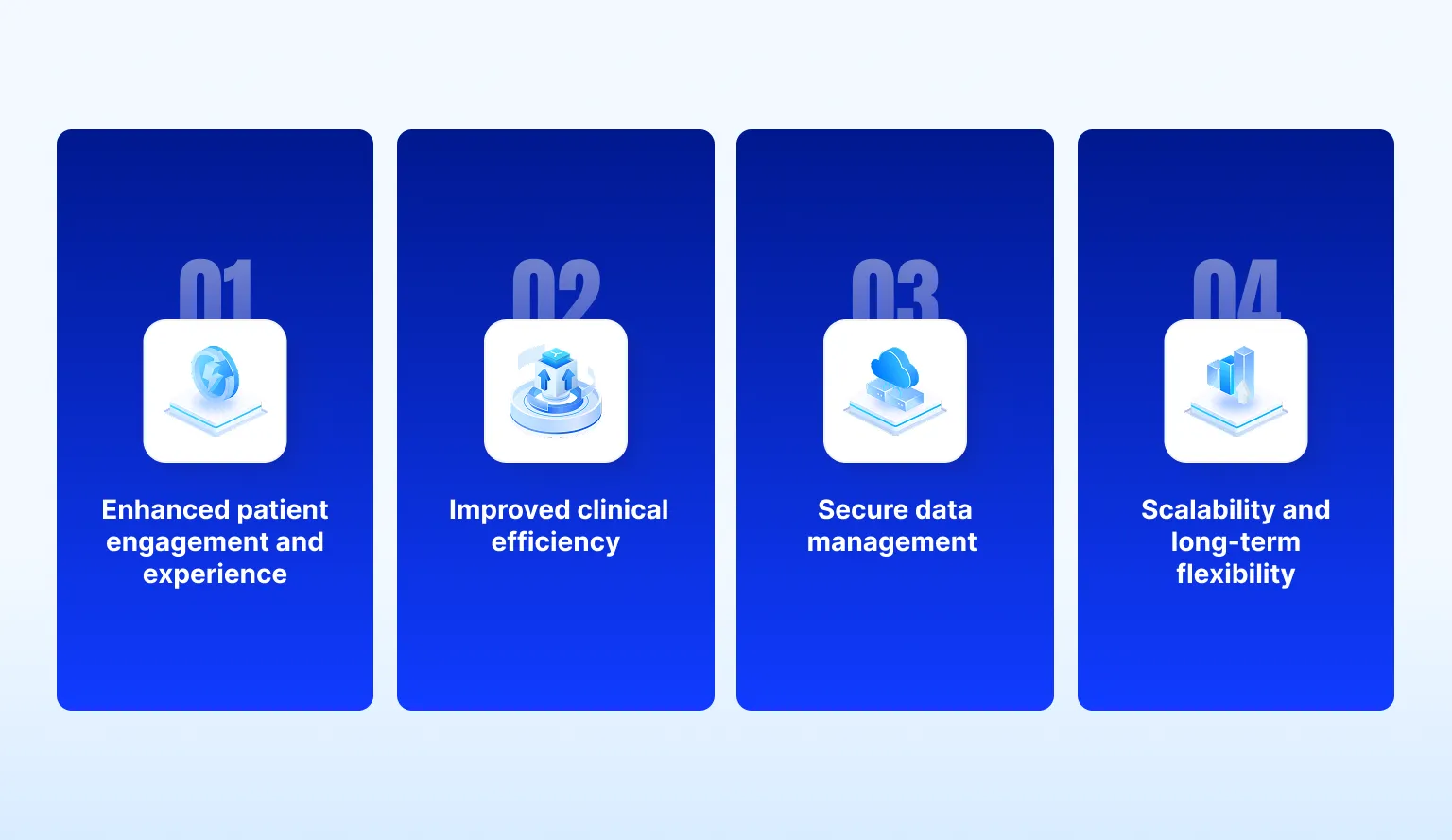
- Enhanced patient engagement and experience
One of the most significant advantages of custom mobile health apps is their ability to improve patient engagement. Because the apps are designed specifically for a target user group, they become easier to use, more relevant, and more effective.
These apps allow patients to book appointments, access medical records, receive medication reminders, and communicate securely with healthcare providers from a single platform. On the other hand, personalized dashboards, condition-specific tracking, and intuitive navigation help patients stick to care and treatment plans, which leads to higher satisfaction and better health outcomes. - Improved clinical efficiency
Custom mobile health apps also play an important role in improving clinical efficiency. By automating routine tasks and centralizing patient data, these apps reduce workloads for doctors, clinicians, and healthcare staff.
Moreover, healthcare professionals can quickly access patient histories, update clinical notes, manage schedules, and collaborate with care teams in real time. This workflow minimizes manual paperwork, reduces errors, and allows clinicians to focus more on patient care rather than operational tasks. - Secure data management
Data security is a top priority in healthcare, and custom mobile health apps offer greater control over how sensitive information is stored, accessed, and shared. Unlike third-party platforms with fixed security models, custom solutions can be built with security and compliance following requirements of the clients
Besides, features such as end-to-end encryption, role-based access control, Two-Factor/Biometric authentication, and audit trails help protect patient data and meet regulatory requirements like HIPAA and GDPR. This level of security not only reduces risk but also builds trust among patients and healthcare providers. - Scalability and long-term flexibility
Healthcare demands will change over time, and custom mHealth apps are designed to grow along with the healthcare service provider. Whether it’s adding new features, integrating wearable devices, or expanding into new regions, custom solutions provide the flexibility to adapt these things.
Custom apps can also easily support increasing user volumes, new service offerings, and changing compliance requirements. This scalability ensures that the app remains a long-term development rather than a short-term fix, making it a more sustainable and cost-effective solution.
Key Features of a Mobile Health App
Successful mobile health apps must meet the needs of patients, clinicians, and healthcare organizations. When planning custom healthcare mobile application development, your app should have essential features as below for delivering safe, efficient, and scalable digital healthcare solutions.
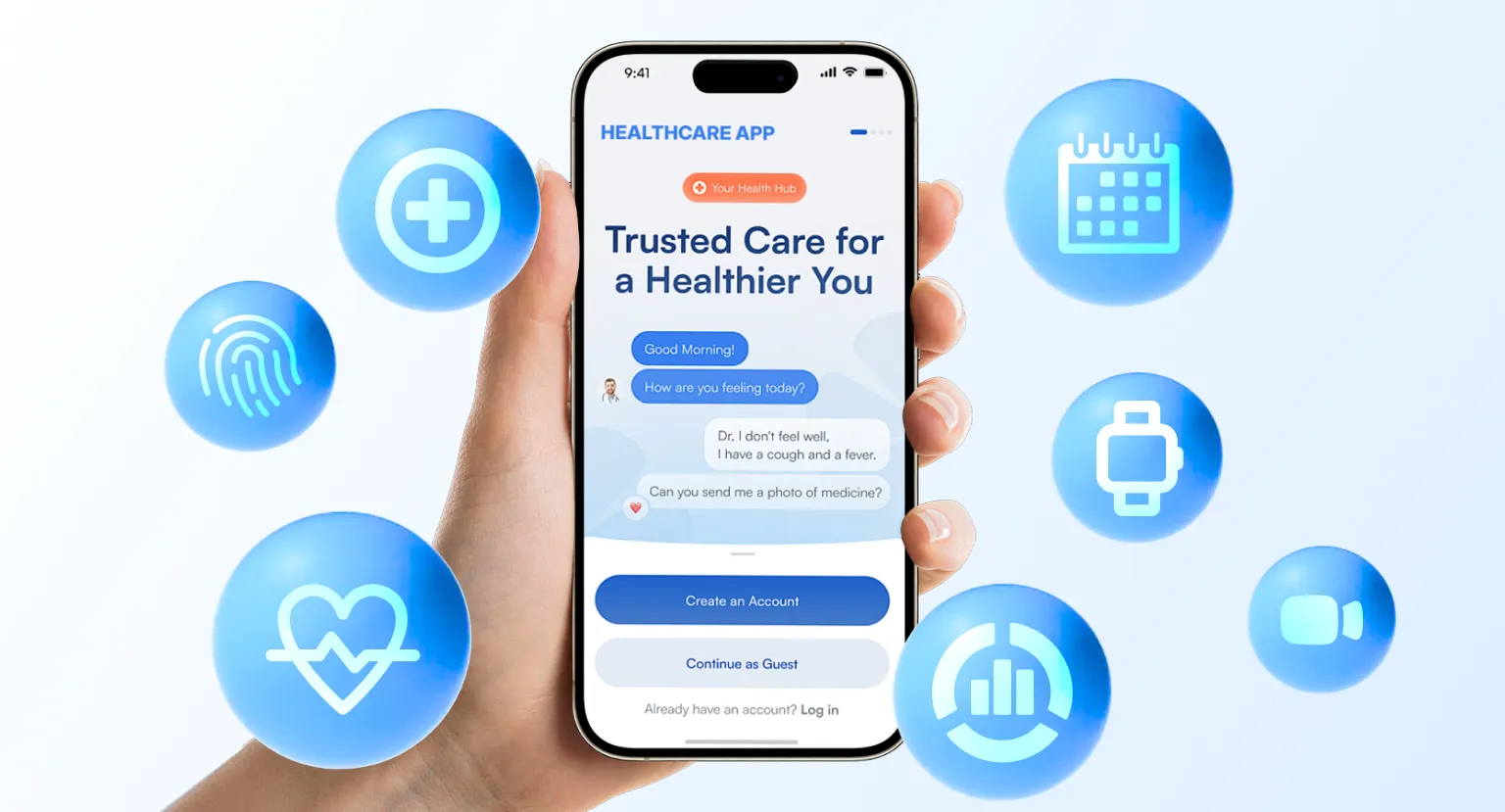
- User authentication & role-based access management
Security starts with user authentication and access control. Mobile health apps must ensure that sensitive health data is only accessible to authorized users.
This feature allows different user roles, such as patients, doctors, clinicians, and administrators, to access only the information and functions relevant to them. Secure login methods, including multi-factor authentication and biometric verification, protect patient data and help maintain compliance with healthcare regulations. - Appointment booking & reminders
Appointment scheduling is a core feature that improves both patient experience and operational efficiency. The apps allow patients to book, reschedule, or cancel appointments directly from their devices. Automated reminders via push notifications or emails help reduce missed appointments and ensure patients stay engaged with their care plans. Besides, for healthcare providers, this feature simplifies calendar management and resource allocation. - Teleconsultation & video call
Teleconsultation enables remote healthcare delivery through video, voice, or chat communication. This feature is especially valuable for follow-up visits, chronic condition management, and patients in remote locations. It allows patients and clinicians to interact in real time and share medical information. However, teleconsultation features must be built with strong encryption and comply with telehealth regulations to ensure privacy and reliability. - Health condition trackers
Health condition tracking helps patients monitor their symptoms, vital signs, and daily health metrics. These trackers can be customized for specific conditions such as diabetes, hypertension, or asthma. By allowing patients to log data regularly, healthcare providers gain better visibility into patient progress and can make informed clinical decisions. Furthermore, this feature also encourages patients to stay engaged and proactive in managing their health. - EHR/EMR integration
Integration with Electronic Health Records (EHR) or Electronic Medical Records (EMR) systems is important for continuity of care. This feature enables data exchange between the mobile app and existing healthcare systems. With EHR/EMR integration, clinicians can access up-to-date patient information, lab results, and treatment histories directly from the app. This reduces duplication, minimizes errors, and improves care coordination across departments. - Analytics and reporting
Analytics and reporting features provide insights into both clinical and operational performance. Mobile health apps can track patient engagement, health outcomes, appointment trends, and system usage. For healthcare organizations, these insights support decision-making processes, performance optimization, and regulatory reporting. Additionally, custom analytics dashboards can be designed to meet specific business or clinical requirements. - Wearable Integration
Wearable integration allows mobile health apps to collect real-time health data from devices such as smartwatches, fitness trackers, and medical wearables. This feature supports health monitoring by capturing metrics like heart rate, activity levels, sleep patterns, and glucose readings. This feature enhances remote patient monitoring and enables proactive care by alerting clinicians to potential health risks.
Healthcare Mobile Application Development Process
To build a custom mobile health app, you need a structured development process that balances usability, security, and long-term development. From initial planning to post-deploy support, each stage plays a significant role in ensuring the app delivers safe and effective healthcare services.
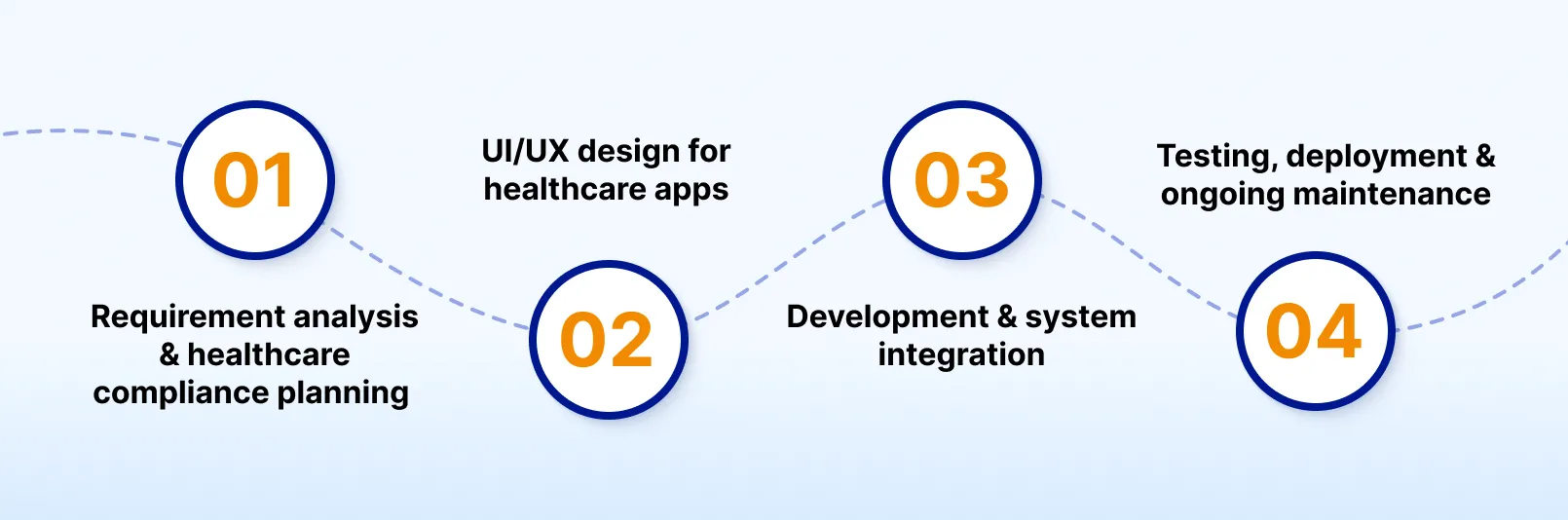
- Requirement analysis & healthcare compliance planning
The healthcare mobile application development process begins with a detailed requirement analysis. At this stage, stakeholders define the app’s goals, target users, and core functionalities. This includes identifying user roles such as patients, clinicians, and administrators, as well as workflows and data requirements. Healthcare compliance planning is also considered part of this phase. Regulations such as HIPAA, GDPR, HL7/FHIR, or FDA guidelines must be determined early to avoid costly changes later. And finally, security requirements, data privacy rules, and audit needs are documented to ensure the app is compliant by the design step. - UI/UX design for healthcare apps
When the requirements are clear, the focus shifts to UI/UX design. Healthcare apps must be intuitive, accessible, and easy to navigate for users with varying levels of technical proficiency. Designers will create wireframes and prototypes that prioritize clarity, usability, and accessibility. The designer should spend special attention on user flows, readable layouts, and simple interactions to reduce errors and improve performance. A well-designed healthcare app enhances patient engagement while supporting clinicians in taking care of patients. - Development & system integration
During the development phase, developers will implement core features, user authentication, data encryption, and backend infrastructure. Besides, system integration is also a key component of this stage. The app will be connected to existing healthcare systems such as EHR/EMR platforms, hospital management systems, wearable devices, and third-party services. Therefore, you should ensure proper integration for smooth data exchange across systems. - Testing, deployment & ongoing maintenance
Before launching, the app must undergo comprehensive testing to ensure performance, security, and reliability. This stage includes functional testing, usability testing, security testing, and compliance validation. After successful testing, the app is deployed to app stores or enterprise environments.
Finally, the ongoing maintenance phase is a must to keep the app secure, compliant, and up to date. This includes monitoring performance, fixing bugs, applying security updates, and adding new features as healthcare needs to change.
Cost of Custom Healthcare Mobile Application Development
We don’t have a fixed cost for custom healthcare mobile application development. The cost can be 50,000 to 500,000+ depending on the app’s scope, complexity, and compliance requirements. Understanding what affects development costs helps healthcare organizations plan budgets realistically and make the right decisions.
- Key factors affect to development cost
Several factors directly influence the cost of developing a custom mobile health app such as:
App complexity and features: Apps with basic functionality such as appointment booking and notifications cost less than advanced solutions that include telemedicine, EHR integration, wearable connectivity, or AI-powered analytics.
Regulatory and compliance requirements: A healthcare mobile app that requires regulations such as HIPAA, GDPR, HL7/FHIR, or FDA guidelines will increase development time and cost. Because it must handle sensitive medical data with stronger security, audit trails, and compliance validation.
Platform selection: Developing for iOS, Android, or both platforms also affects cost. Cross-platform development may reduce costs, while native development offers better performance at a higher price.
System integrations: Integrating with EHR/EMR systems, hospital software, insurance platforms, or wearable devices adds complexity and cost
Development team and location: Costs will change depending on whether development is implemented in-house or outsourced, and by the geographical location and expertise level of the development team. - Estimated development cost ranges
While exact costs depend on project specifics, the following ranges provide a general estimate:
Basic mobile health app (MVP): $10,000 – $50,000
Mid-level mobile health app: $50,000 – $150,000+
Advanced or medical-grade app: $150,000 – $500,000+
These estimates typically include design, development, testing, and initial deployment, but ongoing maintenance and post-deploy support may require additional budget. - Tips to optimize development budget
Healthcare organizations can manage costs effectively by planning strategically:
First start MVP (Minimum Viable Product): You can begin with essential features and expand gradually based on user feedback and business needs.
Prioritize features based on impact: Let’s focus on features that deliver the highest value to patients and clinicians rather than building everything at once.
Plan compliance early: You should note down the regulatory requirements from the beginning to avoid costly redesigns or delays later.
Choose the right development approach: Cross-platform frameworks can help you reduce development time and cost without reducing quality for many use cases.
Invest in scalable architecture: You must build a flexible, scalable foundation to reduce development costs in the future when the app grows.
Future Trends in Healthcare Mobile Application Development
As digital healthcare continues to grow, mobile health apps are becoming more intelligent, connected, and secure. Emerging technologies are shaping how healthcare services are delivered, improving patient outcomes while increasing efficiency for healthcare providers. The following trends are expected to navigate healthcare mobile application development in the future.
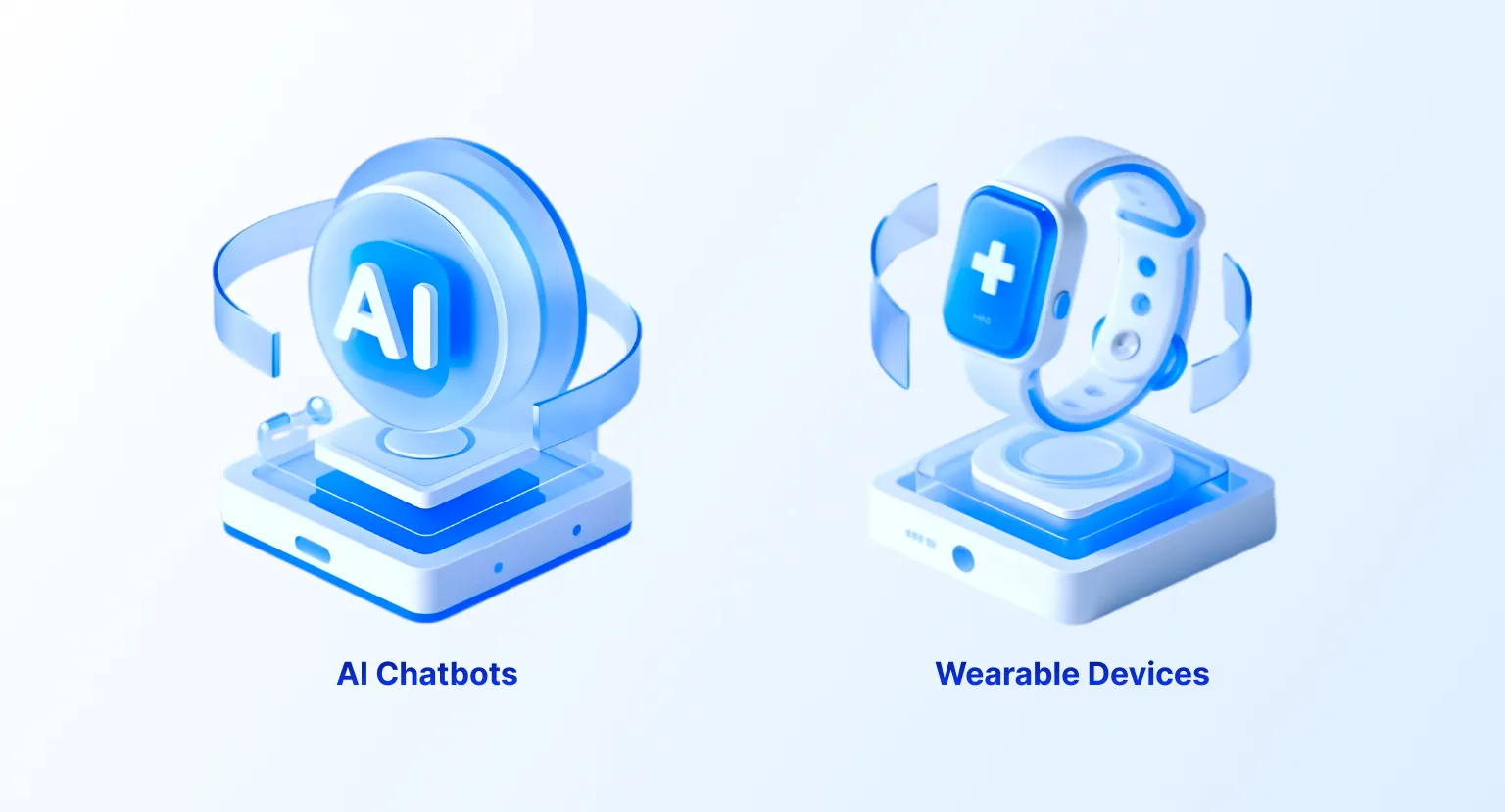
Future Trends in Healthcare Mobile Application Development
- AI-driven diagnostics and chatbots
Artificial Intelligence (AI) is transforming mobile health apps by enabling faster, more accurate, and more personalized care. AI-powered diagnostics can analyze patient data, symptoms, and medical histories to support detection and clinical decision-making.
Meanwhile, chatbots and virtual health assistants are used to handle routine interactions such as symptom checking, appointment scheduling, medication reminders, and patient education. These tools reduce the workload on healthcare staff and provide patients with 24/7 support. Over time, AI-driven systems can also learn from user data to deliver more personalized health recommendations. - Remote care and wearable integration
Remote care are becoming a core feature of modern healthcare and mobile health apps. Integration with wearable devices and medical IoT sensors allows apps to collect real-time health data such as heart rate, activity levels, sleep patterns, and glucose readings. These data support remote patient monitoring, chronic disease management, and preventive care. For Healthcare providers, they can track patient conditions outside the clinical center and intervene immediately when abnormal patterns are detected. As wearable technology becomes more advanced and popular, remote care solutions will continue to expand in both scope and impact.
Conclusion
Mobile health apps are reshaping how healthcare services are provided by improving patient engagement, enabling remote care, and enhancing clinical workflows. They also allow healthcare businesses to build competitive features, ensure regulatory compliance, and scale efficiently in the future.
With emerging technologies such as AI, telemedicine, and wearable integration, mHealth apps will play an important role in modern healthcare. So, organizations or businesses that invest in secure, flexible, and trending mobile health solutions will be well positioned to deliver better patient outcomes and long-term value.
If you are planning to develop a custom mobile health app, contact LARION to build a secure and scalable mobile health solution that meets your needs.